January 21, 2026
Scuole senza permesso. When you don't need permission to help those in need
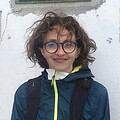 @Marta
Scuole Senza Permesso is a grassroots, non-political network of free Italian language schools for migrants in Milan and its hinterland, founded in spring 2005 by volunteer groups that explicitly identify with people without rights (“senza permesso”). The network comprises around 38 schools -associations, parishes, social centers, and informal groups, run by over 700 volunteers. It welcomes learners of any origin, including people without residence permits, and offers mainly basic-level Italian courses to support everyday life, integration, and rights awareness.
The network operates without political affiliations, grounded in principles of inclusion, equality, and social justice. It rejects the term “clandestino” and advocates for migrants’ freedom of movement and settlement. It coordinates through a shared website (scuolesenzapermesso.org) featuring a school map, enrollment information, and teaching resources.
It organizes collective initiatives such as annual cinema outings at Cinema Beltrade (often involving over 700 students), summer schools for newcomers, and citizenship education courses on Italian culture, laws, labor rights, and civic duties.
During the Covid-19 pandemic, Scuole Senza Permesso rapidly shifted to distance learning via mobile phones, WhatsApp, and Zoom, created a shared digital archive of teaching materials, and collaborated with the Municipality of Milan on the “Scuola Remota” (“Remote School”) program, providing online Italian lessons to unaccompanied foreign minors in emergency shelters and helping safeguard their educational continuity and residence permit prospects.
In December 2025, the network received a Certificate of Civic Merit (Attestato di civica benemerenza) awarded as part of Milan’s Ambrogino d’Oro honors, recognizing its long-standing contribution to inclusion in a city where nearly 29% of residents have a migrant background and many live without regular status. Giuliana Muti, member of the network, has agreed to share Scuole Senza Permesso’s experience, particularly regarding how it navigated and reorganized during the Covid period.
(Note: This overview is based on information from the official Scuole Senza Permesso website, reporting on the 2025 Ambrogino d’Oro awards (including MilanoToday and Riforma.it), and interviews and articles documenting the network’s response to the Covid-19 pandemic, such as a 2021 MiTomorrow interview with co-founder Fabio Mantegazza.)
The Schools Without a Permit Network
Marta Abba: Giuliana, I would like to talk about how Scuole Senza Permesso dealt with the Covid period. Could you tell me how it affected you and how the network organized itself?
Giuliana Muti: I coordinate Porto di Mare, an Italian L2 school for migrants that is part of the Scuole Senza Permesso network. The network was formed spontaneously in 2005, when four or five schools chose to collaborate by sharing experiences, skills, themes, and practical solutions. Over time, it has grown into a significant social presence in Milan, to the point that this year it received the Ambrogino d’Oro recognition. Today, Scuole Senza Permesso is a recognized actor in the field of active citizenship and social action in the city.
The network currently includes 37 volunteer-run schools operating in Milan and its surrounding areas, with approximately 7,000 students enrolling each year and around 700 volunteers. These figures come from the most recent census of network activities, conducted at the end of last year (spring 2025).
Students come from a wide range of countries. At present, the most represented nationalities are Egyptian and Peruvian, although migration patterns shift over time. In earlier years, students from sub-Saharan Africa were predominant, but their numbers have since declined. Today, we also welcome learners from Sri Lanka, Afghanistan, and many other countries. Most students enroll at very low levels of Italian—pre-A1 (often referred to as “alfa”), followed by A1 and A2—with only a small number reaching B1. These figures give a sense of the scale the network has reached, and of its role as a genuine point of reference across the city and its hinterland.
Covid reached Milan in February 2020, at a particularly significant moment for the network. The first school closures were announced in mid-February, just as we were preparing one of our most important annual initiatives. In addition to coordinating educational activities, the network organizes cultural and social events that bring students together outside the classroom. For many years, every mid-February, all participating schools have taken their students to the cinema. Initially, this was done in collaboration with Cinema Beltrade, which offered reduced tickets at two to three euros. Over an entire weekend, the cinema would fill up, with each school bringing between three and thirty students. It was a festive occasion, made even more meaningful by the opportunity for students from different schools—often sharing national or linguistic backgrounds—to meet and connect.
On the eve of that event, news arrived that all schools would have to close due to the imminent lockdown. It was an intensely emotional moment. Volunteers exchanged frantic phone calls and messages, unsure whether to go ahead or cancel. Some schools decided to proceed, resulting in a nearly empty cinema; others chose not to. From the following Monday, all schools closed.
For migrants, an Italian language school is not only a place of learning. It is also a space for social relationships, access to information, and mutual support. With the lockdown, many students were confined to housing that was overcrowded or inadequate, very different from our own, or to reception centers. Others, whose housing situations were already precarious, ended up on the street and were placed in emergency cold shelters.
The lockdown and the isolation
For me, recalling those moments brings up a series of very strong emotions. I remember for example, three Afghan students who had joined our school only weeks before the lockdown. Because there were no places available in reception centers, they were staying in emergency dormitories. At first, these shelters were open only at night; during the day, the boys were forced to wander through a city that was otherwise completely deserted. After public concern was raised, the municipality decided to keep them inside the dormitories around the clock. This led to severe distress, episodes of violence, and complete isolation. They were not even allowed to leave to buy phone credit, which for migrants is essential not only for social media, but for maintaining contact with family, friends, and their wider communities.
MA: This is such an intense story, it started a wave of memories and emotions for me too. Please don’t stop, if I am silent it’s because your story is so rich.
GM: At a certain point, these boys were no longer able to buy phone top-ups. It may sound trivial, but it was devastating. Their mobile phones were not just for social media: they were their entire network of relationships and emotional ties, connecting them to family, friends, and others from the same background.
We organized ourselves as a school, together with others, to buy phone credit and top up their SIM cards as volunteers, so that they could remain connected to the outside world and not be completely cut off. Later, when late spring arrived and the cold shelters were closed, it was a very difficult moment. Some of the boys who still had no place in municipal reception centers ended up sleeping under bridges. I could not accept that. I contacted every institutional and non-institutional channel I could to find accommodation, and eventually managed to secure a hostel that took them in for a couple of months, while they waited for a place in reception centers. For migrants, this was an intensely isolating and traumatic period.
I remember that during that time there were many webinars and online meetings, with everyone confined at home, listening to voices from the outside world. One meeting featured Cecilia Strada speaking about migrants. She said something that struck me deeply: “They say we are all in the same boat. No. We are all in the same storm, but the boats are different.” I think this phrase captured very well what the lockdown was like for us Italians - many people struggled deeply, and some have still not recovered. But for migrants, who lost work, contacts, social relationships, points of reference, advice, and support, the experience was entirely different. They were truly adrift.
Organizing in the emergency
MA: How did the network act?
GM: I must say that the crisis brought out extraordinary resources. During that period, I carried out a survey. The network stayed in touch mainly through WhatsApp and online meetings, and I proposed organizing a questionnaire to understand what was happening across our schools. At the time, the network consisted of 29 schools. Between 20 and 30 May 2020, about two months after the start of the lockdown, 23 out of the 29 schools responded.
We collected data on the number of students and volunteers before and after the lockdown, the number of teaching hours lost, and how many we managed to preserve. Almost all schools attempted some form of distance learning, using whatever tools were available: mobile phones, WhatsApp, Zoom. This required training volunteers, because many of them are retired people, often older and unfamiliar with digital tools. We therefore organized online Zoom training sessions to help volunteer teachers manage remote lessons. Those who were able to do so organized Zoom classes, mostly one-on-one or in small groups. In effect, we built online teaching from scratch.
Out of this process, a large digital archive of teaching materials emerged. Each school independently searched for and downloaded pages, books, and workbooks available online, creating its own small digital library organized by language level. At the end of the lockdown, all these materials were shared and merged into a single network-wide digital archive, which is still used today by both long-standing and new volunteers.
During that same period, another important initiative took place. The Municipality asked us for support in providing emergency assistance for minors. All unaccompanied foreign minors living in reception centers were losing access to language education, which is a serious issue: when they turn eighteen, their residence permit as minors expires, and they risk being expelled from the system. For this reason, reception centers—generally very active and well intentioned—try to enroll minors in courses, internships, or training programs so that, upon turning eighteen, they can apply for administrative continuation, supported by documentation demonstrating their commitment to integration. Without certificates of schooling or training, these minors risked reaching adulthood with no adequate documentation at all.
As a result, the centers asked us for support. Fabio Mantegazza, from the Rogoredo school and a very active member of the network, organized a project called Scuola Remota (“Remote School”). He recruited volunteers from across the network. I do not have the exact figures at hand, but around forty volunteers from different schools made themselves available to provide online Italian lessons to unaccompanied minors. It was a remarkable moment, in which the network pooled its resources in an exceptionally collaborative way to respond to an urgent need.
Most schools, to varying degrees, engaged in online teaching, and a number of significant critical issues emerged. For instance, pre-A1 learners had virtually no access to distance learning, as their language level was too low to manage online instruction. In such cases, some schools relied simply on WhatsApp phone calls, offering reassurance, advice, and a sense of connection, in an effort to maintain contact and prevent complete isolation. Despite this, many people did in fact drift away entirely.
The three Afghan boys I mentioned earlier are a small but telling example. For them, I painstakingly managed to find temporary accommodation in a hostel. Two of them later entered reception centers; the third, who was the most lively, intelligent, but also the most restless, disappeared completely, and we lost all contact with him. This is just one individual story, but it reflects a much broader phenomenon that affected the migrant population on a large scale.
If you wish, I can send you my report by email. It contains all the data, so I do not need to list figures here: objectives, tools used, critical issues, and outcomes are all documented in detail. Naturally, if you use that data, please cite the source, as it is the result of work carried out by Porto di Mare and the Scuole Senza Permesso network. As a medical doctor, and therefore accustomed to scientific research frameworks, I contributed by setting up a rigorous methodology comparable to that used in academic work.
The legacy of Covid and the open questions
MA: If you can share a link with us, or if we include the data directly, it will of course be part of the piece, with all references clearly indicated. And if I later use the material for journalistic work, I will of course cite it. In any case, the source must always be acknowledged; without a cited source, the data are essentially unusable. As you know, data without attribution lose their value.
GM: That was our experience during Covid. What did it leave us with?
It seems to me that it left us with a number of very concrete outcomes. One of them is the digital archive of teaching materials, which is still being continuously updated: whenever we find new texts or exercises, we share them. It also left us with skills we did not have before, because we were forced to become digitally competent in an area that had previously been unfamiliar to us.
We often heard, and still hear, how tragic the pandemic was for public schools, including institutional Italian language schools, middle schools, and high schools, and for teachers who were still of working age and already familiar with digital tools. We also know how difficult it was for public school teachers to manage distance learning. In our case, however, most volunteers were already retired and had little or no familiarity with digital technologies. Now imagine what it meant for us to run small online classes with migrant students who themselves had no digital equipment. Lessons were conducted with us on computers via Zoom, and students connecting from mobile phones, often without stable connections. The challenges were enormous, both technically and culturally.
During that period, volunteers in my school and in others, who were involved in distance learning spent entire days in front of their computers: two classes in the morning, two more in the afternoon, and so on. Through this effort, we acquired skills we did not previously have, and we have retained them. Distance learning has become part of the network’s shared heritage. Almost all schools continue to offer online classes for specific groups of students. In our school, for example, we use distance learning for students who work. Since we only offer in-person classes in the morning and afternoon, and not in the evening, online lessons allow us to meet the needs of working students. One volunteer coordinates this activity, managing two or three online sessions per week. Other schools have maintained similar practices, making this one of the positive legacies of the Covid period.
The digital archive of teaching materials and the use of digital tools are now central to volunteer training as well. The network has always organized training courses for new volunteers. In the past, these were held in person and could reach no more than thirty, fifty, or sixty participants at a time, simply because of space limitations. Through the pandemic, the network learned that training can be delivered effectively online. This includes, for example, courses on Arab cultures, designed to help teachers better understand students’ backgrounds and avoid cultural misunderstandings, small gestures that may be entirely neutral in Italian culture can carry very different meanings elsewhere. Training also covers basic linguistic elements and methods for teaching at zero or pre-literacy levels.
Had all this training remained exclusively in person, the network would have reached a natural limit. Now, online courses can involve up to two hundred volunteers at a time, sessions are recorded, and those who cannot attend live can watch them later. Out of the hardship of Covid and the constraints we were subjected to, genuinely important opportunities emerged.
MA: One question I would like to ask for this collection of testimonies concerns a key theme of this ethnographic research: understanding not so much whether roles changed, but whether they became more blurred during Covid. During that period, everyone was trying to do something, and in some cases rules were relaxed in a constructive way, with people stepping beyond their usual roles to respond to urgent needs.
Did you experience this kind of overlap, or a positive mixing of roles, either within the organization or in your relationship with institutions?
GM: No, I would say that perhaps there was a greater awareness of one’s own role, because we realized how important these reference points were for migrants. From an activity where one went to do one hour of volunteering, teaching Italian, we realized instead what importance these places had for migrants and for the human relationships that were established.
We became much more aware of this. There was no confusion of roles; rather, all of us became much more aware, and therefore we made the efforts that were needed if we wanted to make schools more welcoming. For example, we organized playful activities, city trips, moments of socialization, museum visits, all activities that before Covid we had not realized how precious they were for migrants in order to establish points of reference.
MA: You re-evaluated yourselves, you have more awareness of the importance that perhaps before in the mix of things seemed less.
GM: The relationship with institutions is structurally difficult. The institutions are very quick to ask for help when they need it. As I mentioned earlier with the Scuola Remota project, the center in via Zendrini that manages the reception of minors, immediately contacted us because they were in difficulty, and the network activated itself.
Building on that experience, at the end of Covid Fabio Mantegazza and I went back to via Zendrini and said: this was a good and important experience; we now realize how crucial linguistic training, social inclusion, and educational pathways are for minors. Let’s coordinate better. Instead of sending minors to us in scattered emergency situations, let’s organize this properly. We made ourselves available and even set up a dedicated network email address for minors, so that all requests could be centralized and distributed among the schools that were able to take them on, since not all schools work with minors. This would have allowed us to avoid last-minute, desperate placements in the middle of the school year, which are always very difficult to manage. With even minimal planning, everything would be much simpler. We received no response.
We continue to ask the Municipality for spaces, both for teaching and, especially, for secretarial and coordination activities, because all schools live in a condition of logistical precariousness. Some win a tender that later expires. In my case, I was left without a space. You may remember that you suggested Fabbrica del Vapore, but we lost that tender. I checked again just a week ago. Fortunately, we are now hosted by an Albanian association in via Volturno, in the same area of the city. Without their willingness to host us, I would have had to close the school, simply because I had nowhere to teach.
This is my case, but it happens regularly to other schools. Logistical precariousness is a constant condition. Some schools teach inside public schools, but with strict limitations: they can only operate in the evening, must follow the school calendar, and pay contributions for cleaning and caretaking. Other schools have no permanent headquarters at all and are hosted by libraries, parishes, or other associations. Overall, the logistical situation is always fragile and vulnerable.
We have asked the Municipality countless times to provide spaces, especially for coordination. Every four or five weeks the Network holds meetings of all schools to discuss projects, difficulties, proposals, and textbook choices. These are core coordination activities, yet we are forced to move from one location to another, depending on who can host us. When we meet, we are 30 to 40 people, and in the evening it is always a challenge to find a space that can accommodate us.
So we move from one place to another. What we are asking for is at least one permanent headquarters that can host the Network as an organization and allow us to centralize secretarial and coordination work. After receiving the Ambrogino d’Oro, it finally seems that people are starting to notice us.
MA: I was asking because it’s a familiar pattern. Now they keep asking you for interviews, proposals, and meetings with the Municipality. Fine, let’s see if anything actually moves.
GM: Another critical issue is the CPIA, specifically coordination with it. We provide education, but many of our students, especially those who have the opportunity, and particularly minors, also try to enroll in the CPIA. I work a lot with minors and focus strongly on them, developing projects specifically for minors, often through public calls for proposals that I win. Some of these minors also attend the CPIA.
For this reason, we need to coordinate schedules. I would very much like to be able to interact more closely with the CPIA, because its teaching approach is completely different from mine. Both are important. However, better coordination would likely make things more functional for the users, for the students. This is the reference framework.
Note: This overview is based on information from the official Scuole Senza Permesso website, reporting on the 2025 Ambrogino d’Oro awards (including MilanoToday and Riforma.it), and interviews and articles documenting the network’s response to the Covid-19 pandemic, such as a 2021 MiTomorrow interview with co-founder Fabio Mantegazza.
The original interview with Giuliana Muti in Italian can be found here.
Comments (0)